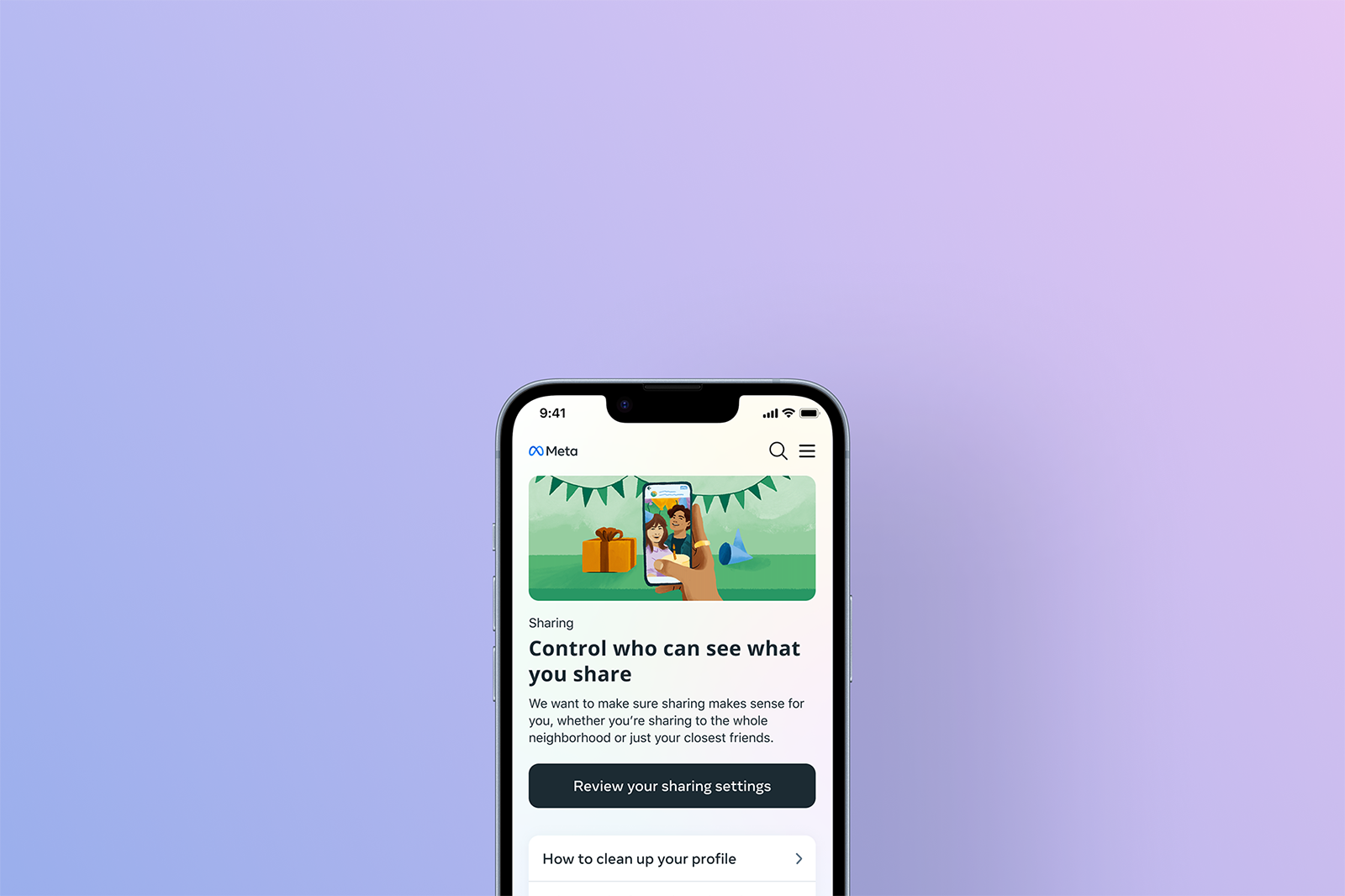
Meta’s Privacy Center
One place to understand and control your privacy across Meta's apps
My Role:
Design Lead
I owned:
End-to-End experience and defining reusable patterns
Timeline:
3 months
Collaboration:
Engineering, Content Design, Project Management, User Research, Data Science, Comms, Legal, Policy
Platform:
iOS, Android, Mobile web and desktop
TL:DR
Problem: Privacy info was scattered across settings, consent flows, and policies, so people left the app to find simple answers.
What I did: Led design of one hub that explains five core privacy concerns in plain language and links straight to the right controls, built on reusable templates.
Result: 1M+ people found answers in under a minute, support tickets dropped, regulator trust improved, and the system scaled to teen education and new topics.
Three of the five topic pages: sharing, security, and data use.
Problems
For users, simple questions like "who can see my posts?" sent people outside the app for answers. User interviews surfaced five core concerns: security, sharing, data collection, data use, and ads.
For the business, that confusion eroded trust and created regulatory pressure.
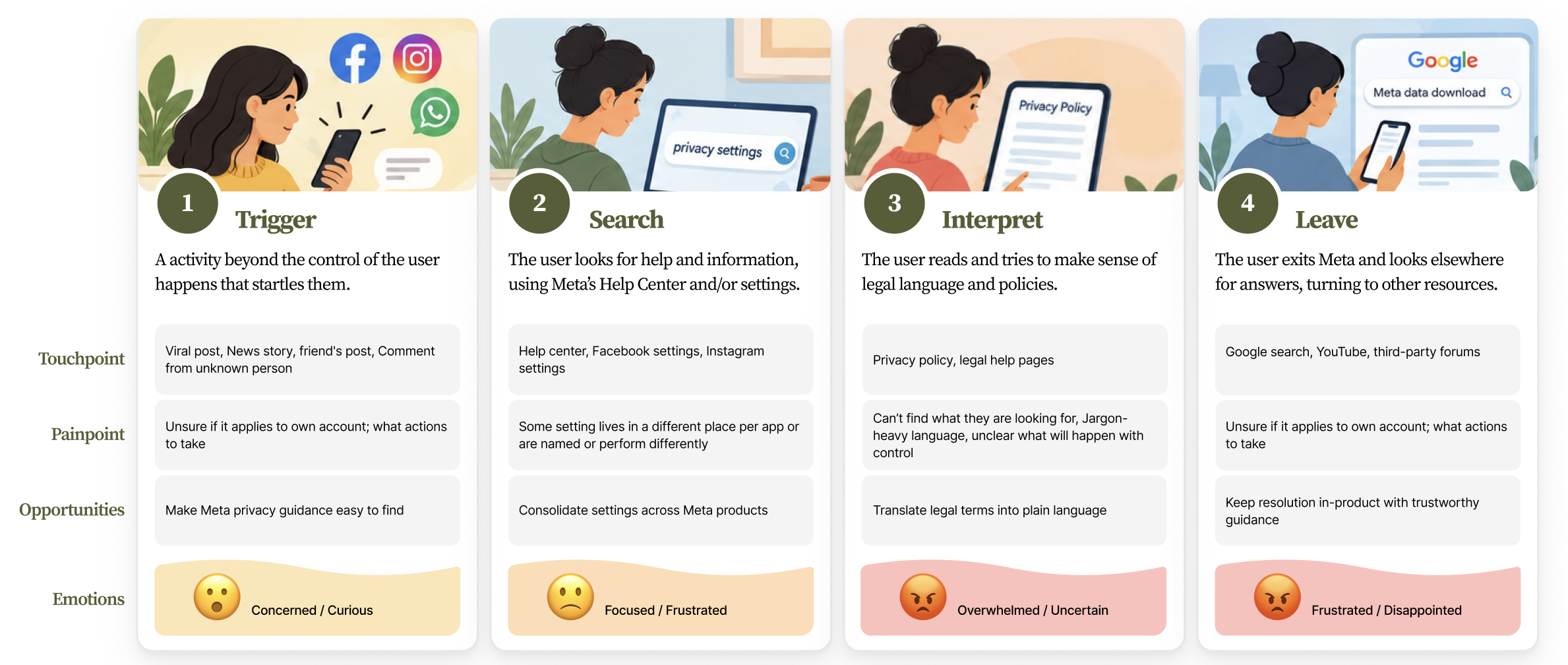
Journey mapping showed people leaving Meta at every stage, from the moment something startled them to searching Google for answers.
Goal
Help people quickly understand a concern, know if it applies to them, and see what to do about it, building trust in Meta's practices along the way.
Principles
Find fast - Get people to an answer before they leave for outside sources.
Set context - Explain a concept before asking anyone to change a setting.
Intentional navigation - People always know where they are and what they can do next.
Meet people where they are - Plain language, within the mental models people already have.
Constraints
Every word needed legal and policy review across 12 markets.
Controls lived in different apps owned by different teams.
A 3-month timeline to launch across four platforms
Key decisions
Focuses on general concerns people may have for a given topic
Decision 01
Task first, not brand first
The push: Leadership wanted to lead with Meta's brand story, using education to reclaim the privacy narrative.
What I did: Rather than argue opinions, I built the brand-first concept and tested it head-to-head against a task-first version. People wanted to resolve their concern and get back to their friends.
The outcome: Task completion became our north star. The brand story became supporting context instead of the front door.
Every topic follows the same reusable template: context on the topic, a direct link to settings (A), the most common user questions (B), and supporting resources (C).
Decision 02
Organize by concern, not by setting
Research showed people think in questions, not settings menus, so every page is built around a concern. Each one follows the same template:
Context that tells people what they'll learn
Quick access to the relevant settings in one tap
Concerns written as the questions people actually ask
Resources for anyone who wants to go deeper
From question to control in a few taps: a person checks who can send them friend requests and updates the setting without hunting through menus.
Decision 03
Link to existing settings, don't rebuild them
No duplication: one source of truth per setting, with each app team keeping ownership.
User trust: people don't have to learn "yet another privacy control."
Lasting discovery: people were more likely to find and reuse a setting when it lived in its familiar place.
Tradeoff: people leave Privacy Center to act, so I added an account confirmation step to make sure they land in the right account.
The final experience
The "explain, then act" flow: start with a plain-language topic, pick the specific concern, confirm the account, and land directly on the right setting.
Outcome
1M+
people found answers in under a minute
~70%
surveyed users completed their task
Fewer
support tickets after launch
Reusable
templates let the system scale to new subjects
What I learned
Back-channeling works - Informal conversations before formal reviews surfaced concerns early, before they became roadblocks.
Know what you're solving for - A clear core problem gave me the conviction to know what to act on and what to set aside.
Never underestimate content design - One well-placed sentence can do as much work as any design pattern.